
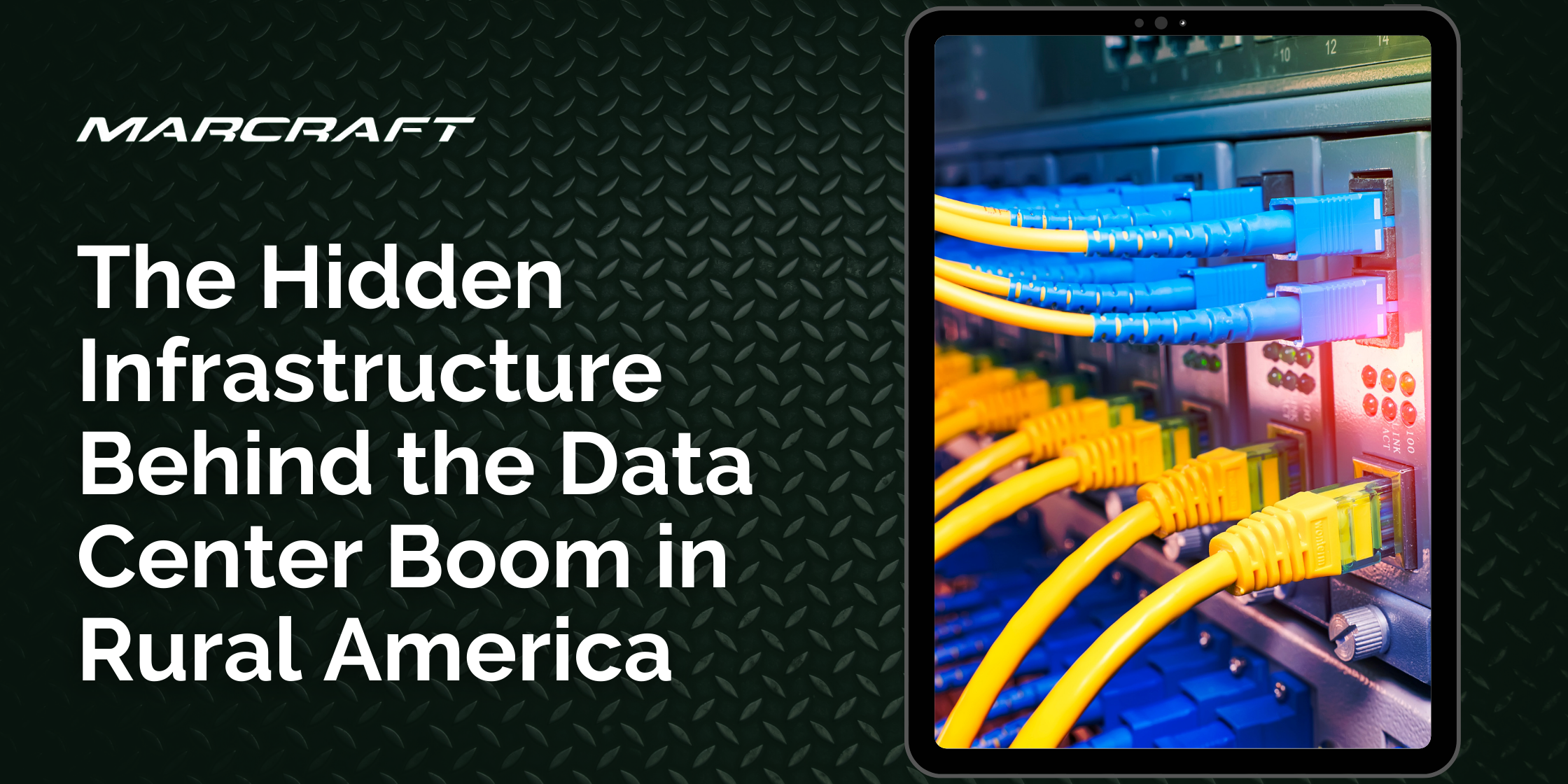
The Hidden Infrastructure Behind the Data Center Boom in Rural America
Why Fiber Optics Is Driving Expansion
Data centers are rapidly expanding beyond major metropolitan areas and into rural regions across the country. Lower land costs, access to power, and the need for geographic distribution are making these areas ideal for large-scale development.
While much of the focus is placed on the size and capabilities of these facilities, there is a critical component working behind the scenes that makes it all possible: fiber optics.
The Backbone of Rural Connectivity
Fiber optics is the foundation that supports modern data infrastructure. It enables high-speed, high-capacity communication that data centers depend on to operate efficiently.
As data centers move into rural areas, fiber networks must expand alongside them. This shift is bringing advanced connectivity into regions that previously had limited infrastructure, helping bridge the gap between urban and rural access.
Fiber optics supports:
- High-speed data transfer for large workloads
- Low latency for real-time applications
- Reliable long-distance communication
- Scalable infrastructure for future growth
Without fiber optics, the expansion of data centers into rural America would not be possible.
The Growing Demand for Skilled Technicians
As fiber infrastructure expands, the demand for skilled technicians continues to grow. Employers are looking for individuals who can do more than understand basic concepts. They need technicians who can work in real-world environments and handle the demands of modern network systems.
Technicians must be able to:
- Install and terminate fiber connections
- Perform splicing and testing
- Interpret blueprints and system layouts
- Troubleshoot network issues
- Follow safety procedures and proper tool handling
According to Marcraft’s Fiber Optics Installer Certification Course, effective training combines foundational knowledge with hands-on experience using real equipment such as fusion splicers, optical time domain reflectometers, and fiber patch panels .
Why Hands-On Training Matters
In today’s workforce, employers expect technicians to be ready to contribute from day one. Hands-on training plays a critical role in preparing students for these expectations.
By working with real tools and systems, students gain practical experience that cannot be replicated through theory alone. This includes building connections, testing networks, and diagnosing issues in realistic scenarios.
Training programs that emphasize applied learning help bridge the gap between education and job readiness, especially as infrastructure projects expand into rural areas where experienced labor may be limited.
Supporting the Future of Infrastructure
The data center boom in rural America is not a short-term trend. It represents a long-term shift in how and where digital infrastructure is built.
As this growth continues, the need for reliable fiber networks and skilled technicians will only increase. Educational institutions and training providers have an opportunity to align their programs with this demand by offering relevant, hands-on curriculum.
Building the Workforce Behind the Network
The expansion of data centers may be visible on the surface, but the true foundation lies beneath it. Fiber optics is the hidden infrastructure powering connectivity across regions.
Marcraft’s fiber optics training program helps prepare students with the knowledge, hands-on skills, and certification pathways needed to support this growing demand and enter the workforce with confidence.